Reading between the rows of South Australia’s iconic vineyards reveals community vitality, pride of passion and intuitive hospitality.
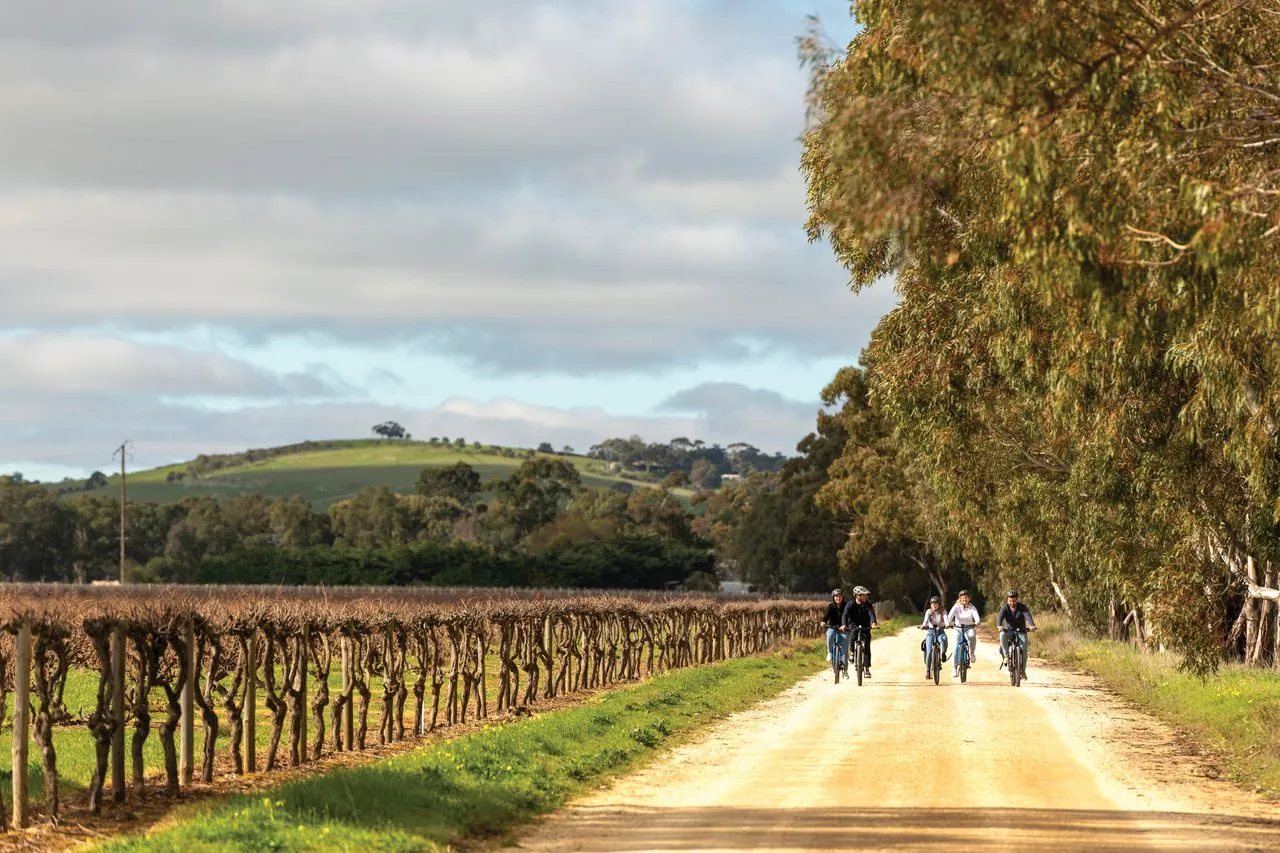
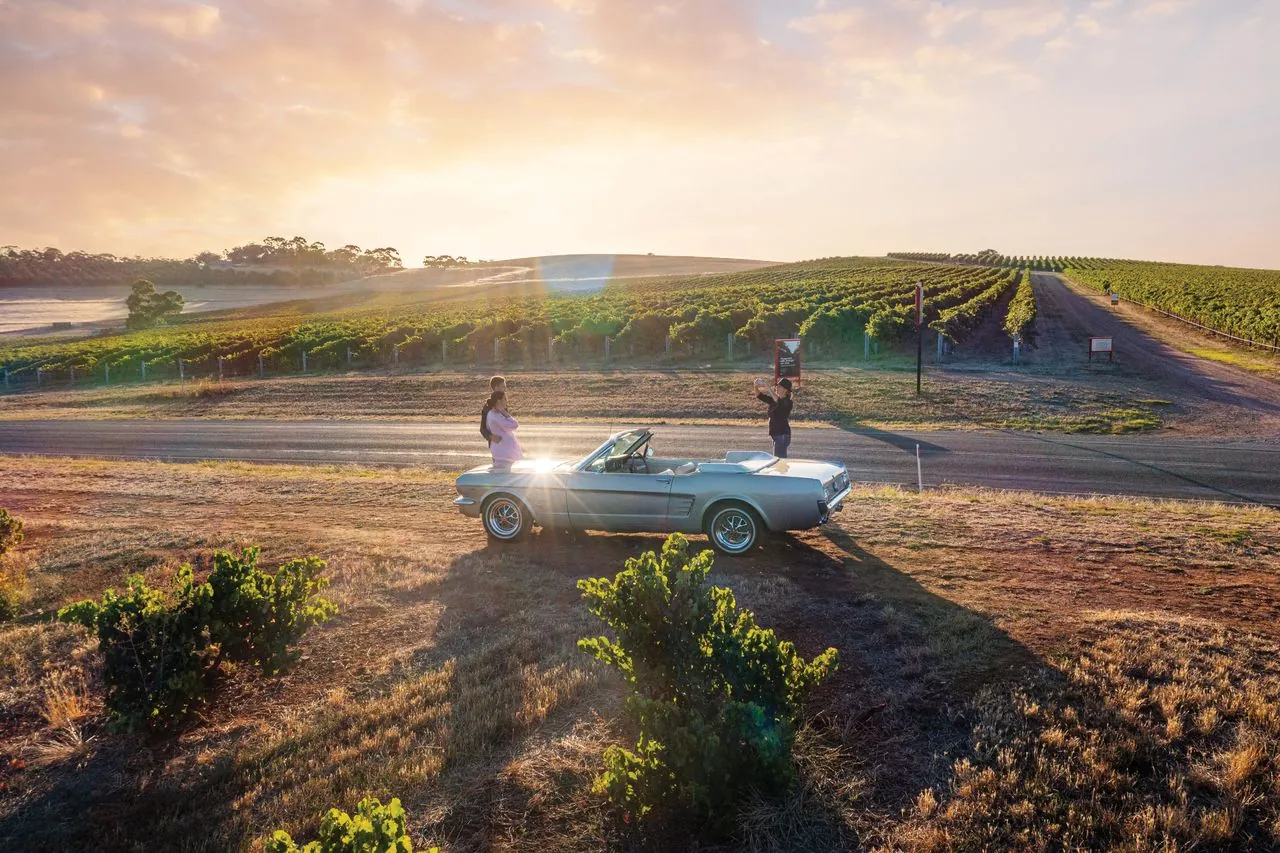
RELUCTANTLY, I’m pushing back from the most exquisite fruit tart I’ve ever had and savouring every last molecule of my glass of rosé. The combination of flavours is heaven, the total embodiment of early autumn in South Australia’s Barossa Wine Valley. We’ve stopped for lunch at Staguni, a charming restaurant seemingly in the middle of nowhere, a destination pitstop housed in what was once a one-room schoolhouse. Our one-hour morning drive northeast from the state capital of Adelaide has landed us in bucolic wine country, with rolling vineyards stretching between stands of eucalyptus – or gum trees – that line the roads. The vista is pebbled with wee farms, many with cellar-door signs promising taste sensation. All this creates an instant sense of peace.
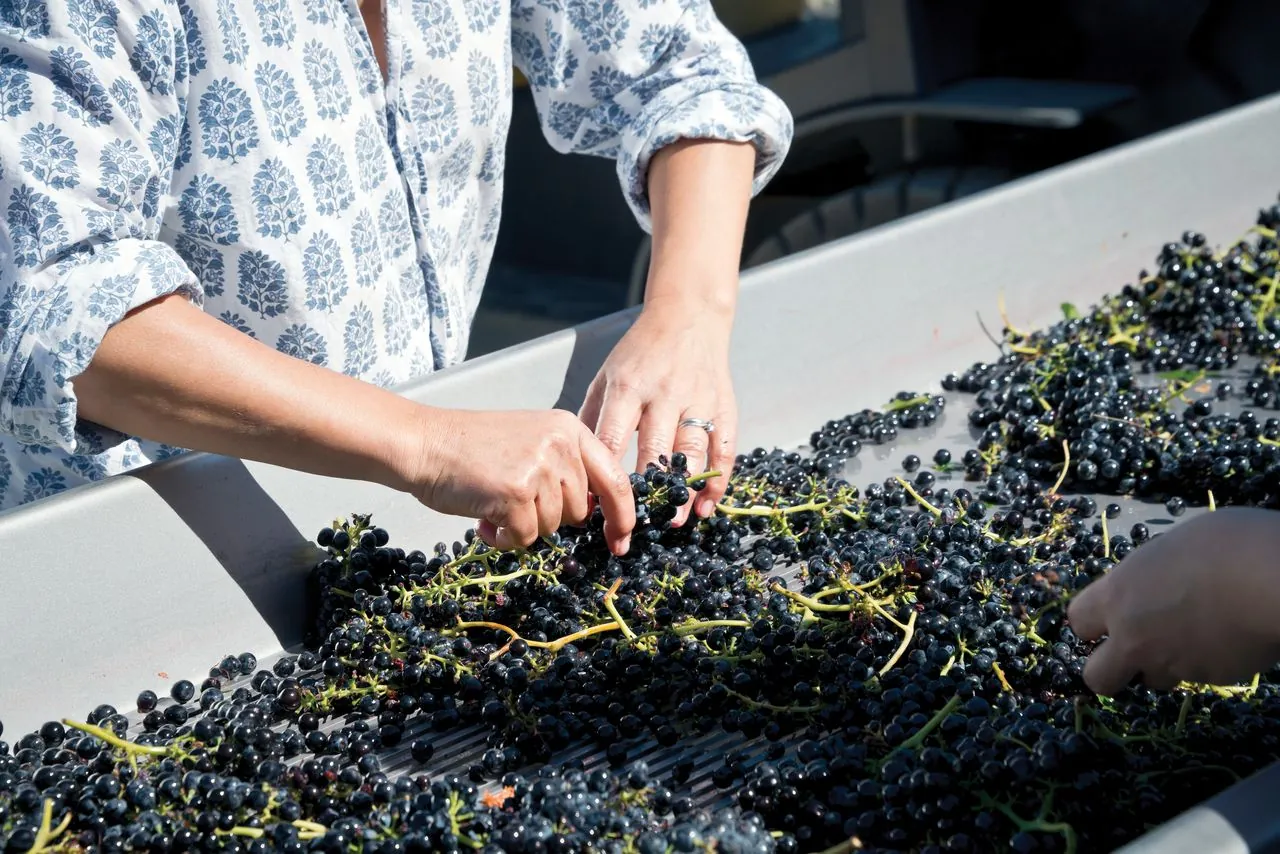
Our little restaurant, run by chef owner Clare Falzon, sets a rustic tone, the kitchen leaning into seasonality with its homespun and creative com fort food. It’s a little microcosm of locality – ingredients, people and all – just one of the many success stories to be told here. Fortified, we then consider our task at hand: tasting the wine. Of course, Barossa has a global reputation, but to actually experience it first-hand is more than marvellous. “Visiting the Barossa Valley gives you the chance to truly get under the skin of the region,” says Dan Coward, commercial director of Alkina Wine Estate. “The wines have a strong imprint of their place, their climate and their traditions.” We drove here for the bold Shiraz, which accounts for about two-thirds of the region’s plantings, but we are pleasantly surprised by so much else: the golden Semillon, the structured Cabernet Sauvignon, the heritage Grenache and the thriving Mourvèdre. The Barossa Zone comprises two main regions. The warmer, lower Barossa Valley is famous for rich, full-bodied and generous reds yielding dark-fruit notes, while the cooler, higher-altitude Eden Valley comes through with floral whites and medium-bodied reds ripe with blue-and red-fruit flavours. Each complements the other nicely. An informally mapped collection of sub regions weaves in and around the villages of Tanunda, Angaston, Nuriootpa, offering more than 80 tasting rooms, all of the wineries boutique, many family-run. And despite the international acclaim, the Barossa Valley has the look and feel of a small community rather than the glitz of a tourist hot-spot.
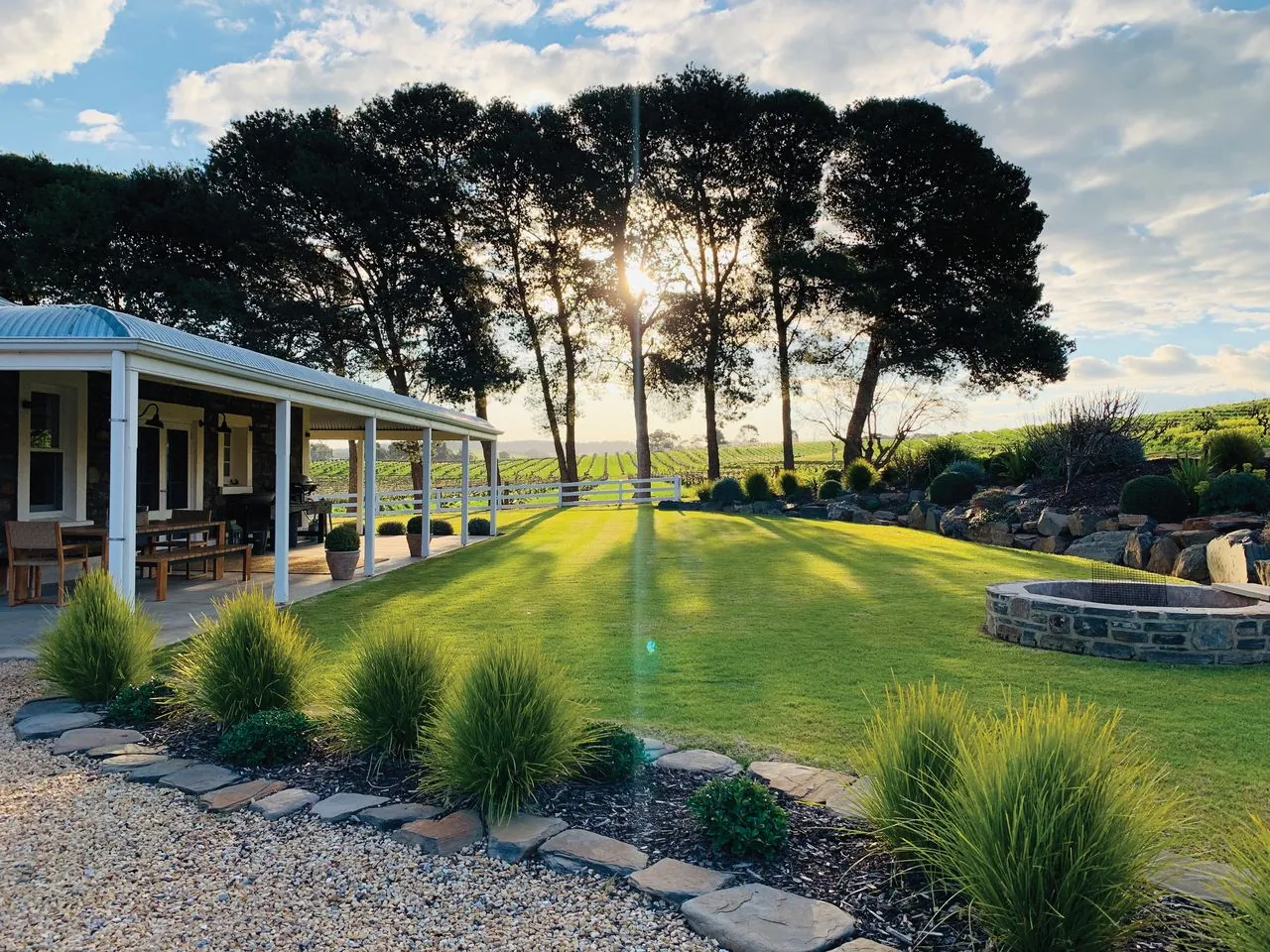
The producers are, of course, passionate about what they do, more focused on sincerity than spectacle, the integrity underscored by enormous character. “Barossans are incredibly proud of their family histories and wine stories,” Dan says. “One thing everyone shares here is history, be that five generations of family grape-growing or just a few years of creating new history like we are at Alkina.”
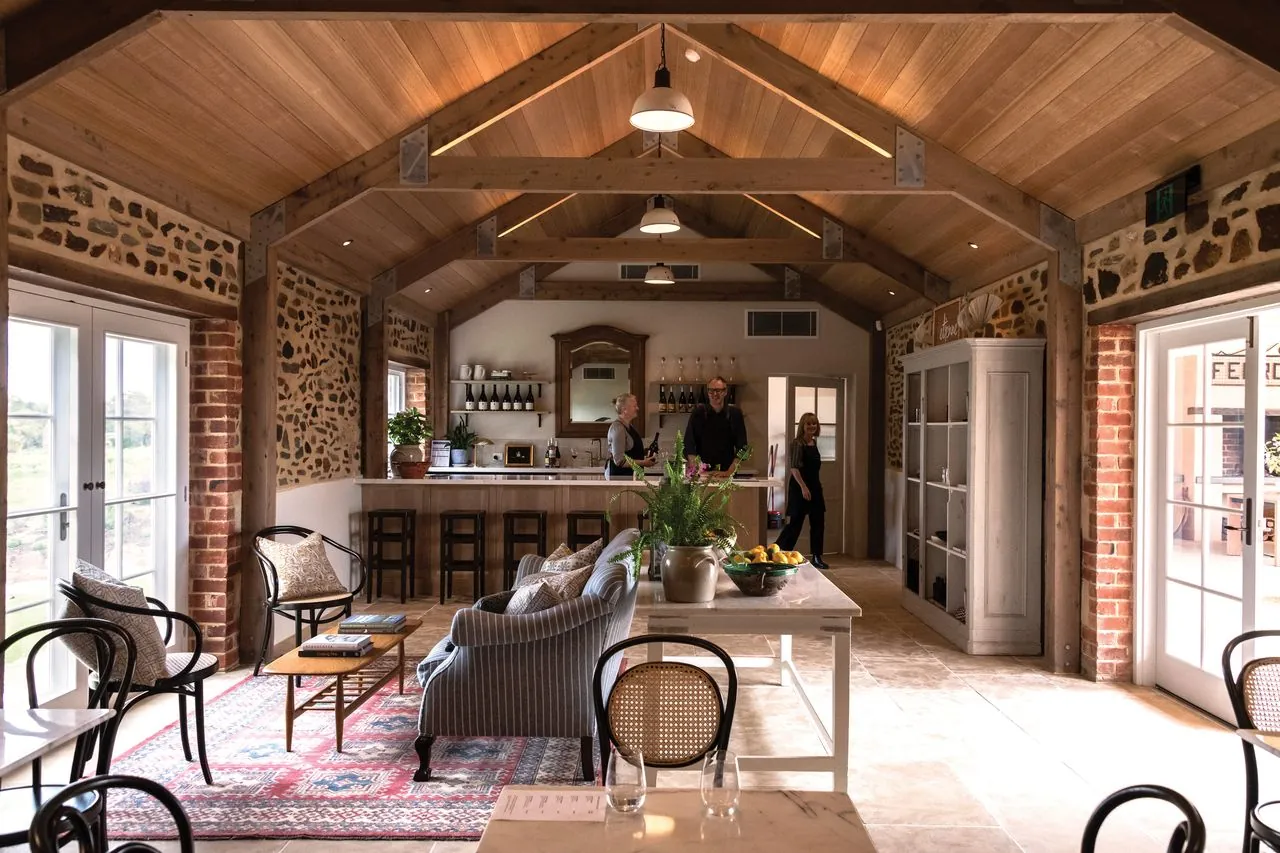
Situated in the Western Barossa Ranges sub-zone, and with its Indigenous name meaning “moon” or “moon light,” Alkina has a relatively new story to tell, having launched in 2015 within the grounds of an old farm. More than 40 hectares are tended according to organic and biodynamic principles, yielding small-scale winemaking at its most creative. We try a classic flight of micro-terroir wines in the 1850s wool shed and get to drink what appeals to us, rather than si§ through a pre-set list. The experience is both intimate and unhurried – and fun! “I urge visitors to go beyond the tasting bar and really get into the vine yards and learn about the sub-regional variations and the varied wine styles,” Dan says. “Taste the older wines and the fortified—there’s something for all levels of knowledge and interest.”
Though Alkina has a new luxury guesthouse, we have opted for a little bit of French flair about 20 minutes down the road at Le Mas Barossa, a hotel and winery in the Rowland Flat region just south of Tanunda. As our tires crunch their way to a stop in the pebbled driveway, we stare wide-eyed at what looks like a centuries-old, Provençal-style stone farmhouse. In the estate’s orangerie, no coaxing is needed to get gin and tonics into our hands as we check in, the afternoon sun streaming through the room’s massive windows. No surprise that the French invented the concept of the orangerie, which lends an aristocratic touch to our first impressions. With only four suites, Le Mas is going to feel like our own personal country house, watched over by just an attendant and a chef. Turns out, we are the only guests for the night, which only amplifies the luxury.
Le Mas is owned by a French Australian family: matriarch Marie France, her daughter Geraldine who is founder and director, and Geraldine’s husband Llewellyn who oversees the vineyard and winemaking. Together, they’ve blended French aesthetics with Barossa Valley heritage to great effect. We wander outside the sandstone walls and onto a terrace overlooking the sloped lawn, grenache vines everywhere you look, enveloping the whole property. An immaculate boxwood maze ominates the garden, with a heated mineral pool tucked under the trees beyond. Truthfully, the kookaburras are the only things giving it away that I’m not in France. The next day, after a delicious breakfast of practically every break
fast item in existence, we take a final stroll to ensure the essence of Barossa is imprinted on our minds. A shy echidna waddles away to avoid saying hello. It’s OK, though. We’ll see him next time.
Written by Doug Wallace for Cruise & Travel Lifestyles magazine (Winter 2026).
Popular Articles & Videos
- Video: Meet the Wine Maker in the 'Tuscany of Austria' on the Danube
- You Need This Suitcase For Your Next Trip to Wine Country
- 3 New, Impossibly Picturesque Boutique Hotels That Make it Easy to Dream About Your Next Trip to Europe
- Cruising with History on Sea Cloud
- Video: Alaska Wildlife Encounters You Can't Miss